

The Truth About Water Safety: Separating Fact from Fiction
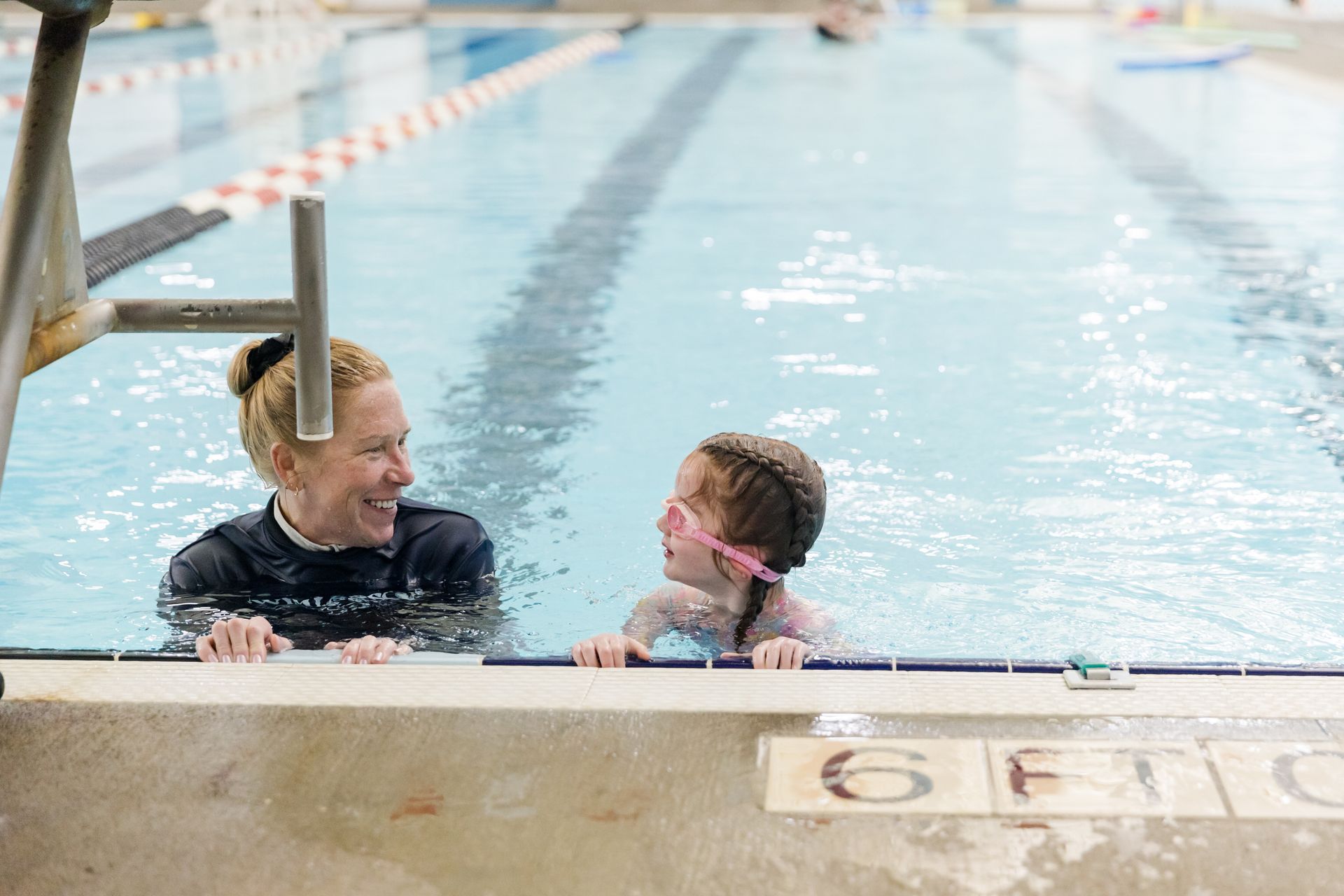
When it comes to water safety, there is no shortage of advice online, but unfortunately, not all of it is accurate. From viral social media posts to well-meaning advice from friends and family, it can be difficult to know what's fact and what's fiction. At Swim Lessons with Mary, one of our goals is to help families make informed decisions that keep their children safe around water. Let's separate fact from fiction by tackling some of the most common water safety myths.
Myth #1: "Dry drowning" is a common risk after swimming.
The Truth: "Dry drowning" isn't actually a medical diagnosis.
You may have seen alarming headlines warning parents that a child can suddenly "dry drown" hours or even days after leaving the pool. While these stories can be scary, medical professionals no longer use the terms dry drowning or secondary drowning.
In very rare cases, a child who inhales water may experience breathing complications shortly afterward. However, these symptoms typically appear within a few hours, not days later, and they are uncommon.
Know when to seek medical care if your child experiences:
- Difficulty breathing
- Persistent coughing that doesn't improve
- Chest pain
- Extreme fatigue or unusual sleepiness
- Vomiting after a water incident
The best way to prevent water-related emergencies is active supervision and ensuring children learn proper water safety skills and breath control.
Myth #2: If my child wears floaties, they're safe in the water.
The Truth: Floaties are toys, not lifesaving devices.
Inflatable arm floaties, puddle jumpers, and similar products can create a false sense of security. They can slip off, deflate, or place children in an unnatural vertical swimming position that doesn't encourage proper swimming skills.
Instead, use:
- Coast Guard-approved life jackets when appropriate
- Constant, undistracted adult supervision
- Swim lessons to build real water safety skills
The goal isn't for children to rely on flotation devices, it's to help them develop the confidence and skills to safely navigate the water.
Myth #3: Lifeguards are watching my child, so I can relax.
The Truth: Lifeguards watch everyone, not just your child.
Even when lifeguards are present, parents remain their child's first layer of protection. Stay within arm's reach of young or inexperienced swimmers, avoid distractions like phones, and designate a "Water Watcher" whenever children are swimming.
Nothing replaces attentive adult supervision.
Myth #4: My child is too young for swim lessons.
The Truth: It's never too early to build comfort and safety around water.
Many parents worry their child is "too little" to benefit from swim lessons. The reality is that early exposure helps children become comfortable in the water while allowing them to begin developing important foundational skills. Lessons are always tailored to a child's age, developmental stage, and comfort level.
Starting early often builds confidence that lasts for years to come.
Myth #5: Once my child learns to swim, they're set for life.
The Truth: Learning to swim greatly reduces the risk of drowning, but no one is ever "drown-proof."
One of the best things you can do for your child is enroll them in quality swim lessons. Research has shown that formal swim lessons can significantly reduce the risk of drowning in young children.
However, even experienced swimmers can become tired, panic, or find themselves in unexpected situations. That's why swim lessons are just one layer of water safety, not the only one. Swimming is also a lifelong skill that requires regular practice. As children grow, their abilities, confidence, and endurance continue to develop.
Consistent lessons help swimmers:
- Strengthen their swimming technique
- Build endurance and confidence
- Learn new water safety and survival skills
- Become comfortable in a variety of aquatic environments
The strongest swimmers are the ones who continue learning and practicing over time. Remember, effective water safety is built on multiple layers working together, including swim lessons, active adult supervision, pool barriers and fences, Coast Guard-approved life jackets when appropriate, and ongoing practice in the water.
Myth #6: The water is shallow, so my child is safe.
The Truth: Drowning can happen in just a few inches of water.
Many parents associate drowning with deep pools or open water, but the reality is that young children can drown in as little as 1–2 inches of water. That's why water safety extends far beyond the swimming pool. Buckets, bathtubs, kiddie pools, fountains, and even coolers filled with melted ice can all pose a drowning risk to small children.
Whether your child is playing in the backyard, taking a bath, or splashing in the shallow end of a pool, the same rule always applies: constant, attentive adult supervision.
If there is water, there is potential risk. Empty containers after use, drain kiddie pools when playtime is over, secure access to pools with proper fencing and gates, and never leave young children unattended around any body of water, no matter how shallow it may seem.
Myth #7: Drowning is loud and obvious.
The Truth: Drowning is often silent.
Unlike what we see in movies, most drowning incidents happen quickly and quietly. A child who is struggling may be unable to call for help because they're focused on trying to breathe. There may be little to no splashing, yelling, or waving for help.
In many cases, a drowning child appears to be simply bobbing in the water or trying to keep their mouth above the surface. That's why it's so important to know what to look for and to remain actively engaged whenever children are in or near the water.
If you ever notice a child who is unusually quiet in the water, check on them immediately. It's always better to interrupt play than to assume everything is okay. Staying close, minimizing distractions, and keeping your eyes on the water can make all the difference.
The Bottom Line
Water safety isn't based on one skill, one device, or one precaution, it's built from multiple layers of protection working together. Swim lessons, active supervision, proper safety equipment, secure pool barriers, and ongoing practice all play an important role in helping keep children safer around water. While no single strategy can eliminate risk entirely, combining these layers dramatically improves your child's safety and confidence in and around the water.
At Swim Lessons with Mary, we're passionate about helping swimmers develop lifelong skills while empowering families with accurate, evidence-based water safety information. The more we replace myths with facts, the better equipped we all are to create safer experiences around the water for our children.